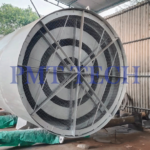
Superheater Safety valve Silencer Manufacturer in Kuwait
In high-pressure steam systems such as thermal power plants and industrial boilers, superheater safety valves play a vital role in protecting equipment from overpressure. However, when these valves operate, they release superheated steam at extremely high velocity—creating intense noise that can exceed 140 dBA.
To manage this, engineers use a Superheater Safety Valve Silencer, a specially designed acoustic device that reduces discharge noise while ensuring the safety valve performs its primary protective function without restriction.
What Is a Superheater Safety Valve Silencer?
A Superheater Safety Valve Silencer is an engineered noise control device installed at the outlet of superheater safety valves. Its purpose is to reduce the high noise generated during steam release from superheater sections of boilers and heat recovery systems.
It is designed to:
- Reduce high-pressure steam discharge noise
- Maintain safe and free flow of relieving steam
- Prevent excessive back pressure on safety valves
- Withstand very high steam temperature and velocity
Why Is It Required?
When a superheater safety valve lifts, steam exits at:
- Extremely high pressure
- Supersonic velocity
- Very high temperature (500–565°C typical)
This results in:
- Shock waves
- Intense aerodynamic noise
- Severe workplace exposure risks
- Potential regulatory non-compliance
Without a silencer, noise levels can be hazardous even hundreds of meters away from the source.
How Does It Work?
A superheater safety valve silencer reduces noise through controlled steam expansion and acoustic energy dissipation.
- Multi-Stage Expansion
Steam is passed through diffuser stages that gradually reduce pressure and velocity, preventing sudden shock formation.
- Flow Splitting
The steam flow is divided into multiple smaller streams, reducing turbulence and acoustic intensity.
- Acoustic Attenuation
Internal chambers and absorption zones dissipate sound energy generated during expansion.
- Controlled Atmospheric Discharge
Steam is safely released with significantly reduced noise while maintaining free relieving capacity.
Key Design Challenges
High Temperature Operation
Superheated steam temperatures require materials capable of withstanding long-term thermal stress without deformation.
High Mass Flow Rates
Superheater relief events involve large instantaneous flow, requiring robust internal diffuser design.
Back Pressure Sensitivity
The silencer must ensure that back pressure remains within allowable limits so the safety valve can function correctly.
Thermal Cycling
Frequent valve lifting during abnormal conditions causes repeated heating and cooling cycles.
Engineering Design Considerations
A properly engineered superheater safety valve silencer must consider:
Steam Conditions
- Pressure: typically 100–180 bar
- Temperature: up to 565°C
- Flow: transient peak discharge
Noise Reduction Target
- Typically 85–90 dBA at specified distance
- Up to 60 dBA noise attenuation depending on design
Material Selection
- Alloy steels for high-temperature zones
- Stainless steel trims for erosion resistance
- Reinforced structural supports
Mechanical Integrity
- Wind load resistance
- Thermal expansion accommodation
- Dynamic discharge force handling
Benefits
Noise Reduction
Significantly reduces hazardous discharge noise levels from >140 dBA to safe limits.
Personnel Safety
Minimizes risk of hearing damage during safety valve lifting events.
Regulatory Compliance
Helps meet occupational and environmental noise standards.
Equipment Protection
Reduces vibration and acoustic shock effects on nearby piping and structures.
Reliable Operation
Ensures safety valves function without restriction during overpressure events.
Difference Between Normal Safety Valve Silencer and Superheater Type
Feature | Standard Safety Valve Silencer | Superheater Safety Valve Silencer |
Temperature Handling | Moderate | Very High (up to 565°C) |
Steam Conditions | Saturated / mild superheat | High superheated steam |
Material Grade | Standard alloy steel | High-grade heat-resistant alloys |
Duty Severity | Medium | Severe / critical |
Application | General industrial use | Power plants, HRSG, boiler superheaters |
Conclusion
A Superheater Safety Valve Silencer is a critical engineering solution for managing extreme noise generated during high-pressure steam relief in power plants and industrial boiler systems. It ensures that safety valves can perform their essential protective function without creating hazardous noise levels or environmental concerns.
As power plants continue to operate at higher pressures and temperatures, the need for advanced, high-performance silencers becomes increasingly important for safe, compliant, and reliable plant operation.